A Childhood Beside P. T. Barnum
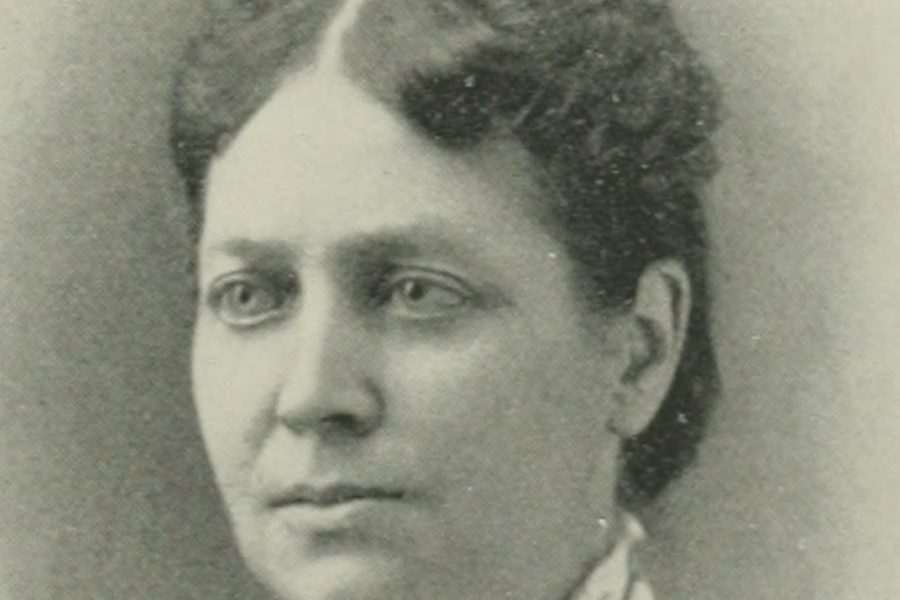
When I look at Helen Maria Hurd’s life, I see more than the daughter of a celebrated showman. I see a woman who stood at the meeting point of family reputation, personal scandal, western expansion, and civic philanthropy.
Helen Maria Barnum was born 18 April 1840. She may have been born in Danbury, Connecticut, New York City, or nearby. A second daughter of Phineas Taylor Barnum and Charity Hallett Barnum. Before her father’s reputation peaked in the nineteenth century, Helen’s childhood began.
P. T. Barnum’s American Museum, theatre, business, politics, and Barnum & Bailey Circus made him famous. Helen grew up in this lively world. Performers, merchants, politicians, artists, and social figures surrounded her family. The household was busy, ambitious, and flamboyant.
Helen advanced in society with a solid education. Her childhood memory includes being a guest of honour at President Ulysses S. Grant’s first inauguration ball. The event reflected the family’s American status. Helen was more than a rich man’s background daughter. She was visible in a prominent family.
Helen’s Parents and Sisters
Helen’s father, P. T. Barnum, was born in 1810 and died in 1891. He was an entrepreneur, author, politician, philanthropist, and master of public attention. His business instincts shaped Helen’s financial future, especially through the real estate he acquired in Colorado.
Her mother, Charity Hallett Barnum, was born in 1808 and died in 1873. Charity was the mother of four daughters, although one died in early childhood. Her marriage to Barnum lasted for decades and formed the foundation of the family’s public and private life.
Helen’s older sister was Caroline Cornelia Barnum Thompson, born in 1833. Caroline married David W. Thompson and remained an important figure in the family circle. Helen married Samuel Hurd at Caroline’s home in 1857, linking the sisters through both affection and family ceremony.
Frances Irena and Pauline Taylor Barnum were Helen’s younger sisters. Frances, born in 1842, died at two years old in 1844. Pauline, born 1846, married Nathan Seeley. Her daughters Helen and Caroline continued the family story after she died in 1877.
The Barnum family also included grandparents Philo Barnum and Irene Taylor on the paternal side, and Benjamin Wright Hallett and Hannah Sturges on the maternal side. Family genealogies connect the Barnum line with several old New England families, including Taylor, Sherwood, and Starr relatives.
Marriage to Samuel Henry Hurd
On 20 October 1857, when she was seventeen, Helen married Samuel Henry Hurd. Hurd was involved in the leather business and later became treasurer and assistant manager of Barnum’s circus enterprises. His position placed him close to Helen’s father’s business world.
Helen and Samuel had three daughters:
| Daughter | Later life |
|---|---|
| Helen Barnum Hurd | Married Francis William Thornton Rennell |
| Julia Caroline Hurd | Married Henry Peck Clarke |
| Caroline Thompson Hurd | Died young in 1883 |
Helen’s first marriage eventually broke apart. Around 1871, she divorced Samuel Hurd, an extraordinary and socially risky decision for a woman of her era. Divorce could damage a family’s reputation, and Helen’s choice caused tension with her father. Yet the relationship between Helen and P. T. Barnum did not disappear. Their personal bond remained affectionate, even when the circumstances were painful.
Custody of Helen’s three daughters went to Samuel Hurd. This arrangement must have been emotionally difficult for Helen, particularly because she soon left the eastern United States and began a new life in Colorado.
Marriage to William Harmon Buchtel
In 1871, Helen married Dr. William Harmon Buchtel. The marriage took place in South Bend, Indiana, although accounts differ over whether the ceremony occurred on 2 March or 22 March.
William was a physician, real estate developer, mining investor, and businessman. He was born in Akron, Ohio, in 1845. His brother, Henry Augustus Buchtel, later became chancellor of the University of Denver and governor of Colorado.
William suffered from tuberculosis, and the couple moved west partly in the hope that Colorado’s climate would improve his health. They settled in the Denver region, where Helen would spend roughly forty four years.
Helen and William had at least two daughters. Lelia, also spelled Leila, married Fred Chamberlain and lived in Denver. Their other daughter, Pauline Buchtel, died in early childhood at about two years and seven months of age.
The Buchtels were at the center of multiple worlds. Helen provided Barnum’s name and funds. William had medical, business, and practical development talents. They helped make southwest Denver a known community.
P. T. Barnum’s Colorado Investments
P. T. Barnum’s Colorado ventures were speculative, ambitious, and often frustrating. He believed that real estate could produce enormous wealth. Colorado’s growing towns, expanding rail connections, and new agricultural settlements attracted his attention.
Barnum visited Colorado several times, including trips in 1870, 1872, 1877, and 1890. He never lived there permanently. His investments were managed through local associates and family members, while Helen and William handled much of the practical work.
The most important purchase came in March 1878, when Barnum acquired about 760 acres from the failed Denver Villa Park Association for approximately $11,000. The property lay southwest of central Denver in an area that later became associated with Barnum, Barnum West, Villa Park, and Valverde.
The land was not an easy prize. It was wet, muddy, and poorly drained. The original vision of an elegant suburb for wealthy residents faded as development proved difficult. Local humor even produced the saying, “If you stick with Barnum, Barnum will stick with you.”
Barnum bought at least eleven Greeley properties between 1870 and 1878. These included land, rented buildings, and Barnum House. Helen and William utilised the mansion for medical activities, a drugstore, and Prospect Villa Park, a tuberculosis institution.
Barnum supported cultural development in Greeley as well, including Barnum Hall, an early performance venue. However, rental properties often produced late payments and management problems. The dream of easy western wealth proved more complicated than the optimistic advertisements suggested.
He also held interests in the Huerfano Cattle Company and associated ranch lands, cattle, and horses. The ranching venture covered a large area along the Huerfano River region and involved David W. Sherwood. Partnerships, debts, and the uncertainty of cattle investment made the project difficult.
The Creation of Denver’s Barnum Neighborhood
Around 1884, P. T. Barnum transferred his remaining Denver property to Helen for a nominal one dollar. The transfer strengthened her financial independence and placed the land’s future in the hands of the daughter who had moved west.
As P, Helen and William developed the property. Barnum Subdivision William was mayor of Barnum, which was formed in 1887. The post office was there from 1892 to 1901. The community was fully integrated by the early 1900s after Denver annexd parts of it.
The neighborhood became a working class residential district rather than the wealthy suburb imagined by earlier promoters. Its streets, homes, and open spaces reflected the steady growth of Denver. The Barnum name survived even as much of the original land changed hands.
Sometimes popular stories say P. Barnum planned to reside there or utilised the property for circus animals’ winter quarters. These anecdotes give colour, but the land was mostly real estate. Barnum didn’t live in Denver. Helen and William shaped the property locally.
Helen as a Denver Philanthropist
Helen became socially prominent in Denver and devoted considerable energy to charitable work. She was involved with St. John’s parish, belonged to the Daughters of the American Revolution, and served charitable organizations in leadership roles.
She was particularly fond of the Denver Orphans’ Home, which she endowed. Charity revealed a facet of her life that Barnum generally overlooks. She was more than a land heiress. She donated, organized, and civically participated to help needy children and families.
Her strength and executive skills were repeatedly described. These traits were useful in a city where institutions were still growing and land, transportation, health, and housing might change quickly. More than her father’s name defined Helen’s public identity. This was based on her Denver name usage.
Helen’s Daughters and Grandchildren
Helen’s first daughter, Helen Barnum Hurd Rennell, married Francis William Thornton Rennell, a member of the stock exchange. She lived in Connecticut and took part in local charitable activities. Her children included Henry Hurd Rennell and Mildred, who later married into the Breul family.
Julia Caroline Hurd married Henry Peck Clarke and moved to South Carolina. She became the mother of Nancy Barnum Clarke Carrier. Nancy later founded Rockbrook Camp in North Carolina, extending the family’s legacy into education, outdoor life, and youth development.
Caroline Thompson Hurd died young in 1883. Her early death added another layer of loss to Helen’s complicated family history.
Helen’s surviving Colorado daughter, Lelia Buchtel Chamberlain, was living in Denver in 1915 as Mrs. Fred Chamberlain. A granddaughter, Mrs. Henry Carrier, was also named among Helen’s surviving relatives.
Helen’s Final Years
William Harmon Buchtel died in 1912. Helen continued living in Denver after his death, maintaining her charitable interests and her connection to the property associated with her father.
On 11 December 1915, Helen died at her home at 635 Emerson Street. She was seventy five years old. She had been shopping the previous day, but soon suffered a sudden attack described as grippe and heart disease.
She was buried in Fairmount Cemetery, although some contemporary accounts referred to Riverside. At the time of her death, she was described as the last surviving direct heir of P. T. Barnum with significant interests connected to the Denver property.
Frequently Asked Questions
Who was Helen Maria Hurd?
Helen Maria Hurd was the second daughter of P. T. Barnum and Charity Hallett Barnum. She became known for her marriages, her connection to Denver’s Barnum neighborhood, and her charitable work in Colorado.
When was Helen Maria Hurd born?
Helen was born on 18 April 1840. Accounts differ over whether her birthplace was Danbury, Connecticut, or New York City.
Who was Helen’s first husband?
Helen’s first husband was Samuel Henry Hurd. They married in 1857 and had three daughters. Their marriage ended in divorce around 1871.
Who was William Harmon Buchtel?
William Harmon Buchtel was Helen’s second husband. He was a physician, real estate developer, mining investor, and brother of Henry Augustus Buchtel. He helped develop the land that became Denver’s Barnum neighborhood.
Did P. T. Barnum live in Denver?
No. P. T. Barnum invested in Colorado land and visited the state several times, but he did not live in Denver. Helen and William Buchtel carried out much of the local development associated with his property.
How did the Barnum neighborhood get its name?
The neighborhood was named after P. T. Barnum, who purchased large tracts of land southwest of Denver. Around 1884, he transferred the remaining property to Helen, and she and William helped develop it.
What charities did Helen support?
Helen supported St. John’s parish, the Denver Orphans’ Home, and other charitable efforts. She also belonged to the Daughters of the American Revolution and held leadership roles in Denver civic organizations.
When did Helen Maria Hurd die?
Helen died on 11 December 1915, at the age of seventy five, in her Denver home on Emerson Street.